
Chase overdue invoices firmly without losing good customers
You don't need to apologise for asking to be paid. Use this practical follow-up sequence, with email and SMS wording, to stay polite, clear and firm.

To follow up an unpaid invoice, send a short, polite reminder once it is overdue: name the invoice, amount and due date, attach it again, and ask for a specific payment date. If there is no response, follow up by phone, confirm any agreement in writing, then consider a final reminder before formal recovery. Keep your own cash pressures out of the message.
The next step depends on why payment is late. A missing invoice, a disputed variation and a customer who keeps breaking payment promises need different responses. Start by finding out which problem you have.
This is general information for Australian trade businesses, not legal, tax or financial advice. The suggested timing below is a working routine, not a legal timetable.
When should you send the first overdue invoice reminder?
As a practical starting point, send your first reminder one or two business days after the agreed due date. Before sending it, check that payment has not arrived, the invoice details are correct and you have not already agreed to an extension.
Australian Government payment terms guidance recommends starting with a polite reminder by phone or email when a customer is late.
Use this suggested sequence for an undisputed invoice. Adjust it when the customer replies rather than continuing through every step regardless.
| Suggested timing | Action | What to ask for |
|---|---|---|
| 1–2 business days overdue | Friendly email with the invoice attached | Confirmation of receipt and a payment date |
| Around a week overdue, if unanswered | Phone call, or a brief SMS asking them to check the email | The reason for the delay and a firm date |
| After a missed promise or continued silence | Clear final reminder | Payment or a substantive response by a stated date |
| After the final reminder deadline | Review formal recovery options | Advice on the appropriate next step |
Avoid calling, texting and emailing repeatedly on the same day. The aim is a clear answer, not a wall of notifications.
What should you say without sounding pushy?
Use neutral facts and one clear request. Leave out “sorry to bother you”, long explanations about your bills and accusations about the customer's intentions.
These are suggested templates. Replace every bracketed field and check the outstanding balance before sending.
First reminder email
Subject: Payment reminder: invoice [number], due [date]
Hi [name], just following up invoice [number] for [brief job description]. The outstanding balance is [amount], and payment was due on [date]. I've attached the invoice again, including payment details. Could you please confirm when payment will be made? If you've already paid, please send the payment reference so I can check it. Thanks, [your name].
Short late payment message by SMS
Hi [name], it's [your name] from [business]. Invoice [number] for [amount] was due on [date]. I've emailed it again. Could you please confirm your payment date? Thanks.
If they say they never received it
Thanks for letting me know. Is [email address] the best address? I'll resend invoice [number] now. Please confirm it arrives and let me know when you can arrange payment.
Resend the invoice rather than arguing about whether the first email arrived. If you agree to a new payment date, record it clearly. Don't leave “I'll sort it soon” as the only agreement.
Should you call or email first?
For a straightforward overdue invoice, start with email so the customer has the invoice and payment details together. Choose a call when you need an explanation or an earlier message has gone unanswered.
 Use a call to clarify what is holding up payment.
Keep the call simple:
Hi [name], I'm following up invoice [number] for [job]. Is there anything holding up payment? If not, what date can you arrange it?
Then listen. Ask whether the issue is the invoice, the work, approval by someone else or difficulty paying. Don't try to solve an unknown problem by sending a harsher version of the same reminder.
After a call, send a short written recap:
Thanks for speaking with me. As discussed, the outstanding balance on invoice [number] is [amount], and you've confirmed payment for [date]. Please let me know if I've misunderstood anything.
Keep a follow-up log with the invoice number, last contact, customer response and next action date. If you're reviewing your broader admin setup, the StitchedUp workflow overview is a useful place to assess whether it suits how you work.
What if the customer disputes the bill or cannot pay?
Use the customer's response to choose your next action:
- They need another copy: confirm the correct recipient, resend it and ask for a payment date.
- They say they have paid: request the payment reference and reconcile your records before chasing again.
- They dispute the work or amount: ask them to identify the specific item in writing. Review the agreed scope, variations and relevant records before responding.
- They cannot pay in full: decide whether you are willing to discuss instalments. Put any agreed amounts and dates in writing.
- They keep missing promises: stop accepting vague assurances. Move to a clear deadline and review your recovery options.
Hypothetical example: a sole-trader electrician is owed a final invoice balance of $1,100, including GST. The customer proposes two payments of $550. If the electrician accepts, the written agreement should specify both payment dates and confirm the total outstanding balance. After receiving the first payment, the remaining balance is $550.
That is an example of recording an agreement, not a recommendation to offer instalments to everyone. For a disputed or substantial debt, get advice before accepting a settlement or changing the arrangement.
When should you send a final notice or letter of demand?
Consider a final reminder when earlier contact has produced no meaningful response, or an agreed payment date has passed. Make it a factual summary rather than an angry message.
Final reminder wording
Subject: Final payment reminder: invoice [number]
Hi [name], invoice [number] for [job] remains unpaid. The outstanding balance is [amount], originally due on [date]. I previously contacted you on [dates]. Please arrange payment by [date], or contact me by then to explain any issue with the invoice. If I haven't received payment or a response by that date, I will review formal recovery options. The invoice and payment details are attached.
Only state an action you genuinely intend to consider. Don't add threats, improvised penalties or claims that legal action has already started.
Australian Government guidance says that if payment still does not come through, options include a letter of demand or debt collecting service. It also notes that recovery takes time and money, and sometimes stopping pursuit and writing off the debt is the best option.
Treat a letter of demand as a separate formal step, not just a stronger subject line. Before sending one, review the agreement, invoice, supporting records and correspondence, and seek advice on its wording and any relevant deadlines. This guide does not establish a required number of reminders or a legally sufficient demand period.
Under Australian consumer law, the ACCC warns against physical force, coercion and undue harassment in debt collection, including persistent unwanted contact that intimidates or demoralises someone. Keep communication proportionate and factual.
For Australian construction-related debts, get advice relevant to your state or territory before choosing an escalation route. This guide does not cover jurisdiction-specific construction payment procedures or deadlines.
How can you reduce repeat late payments?
Start before the next job. Australian Government invoicing guidance says clearly listing payment methods and terms helps reduce unpaid invoices.
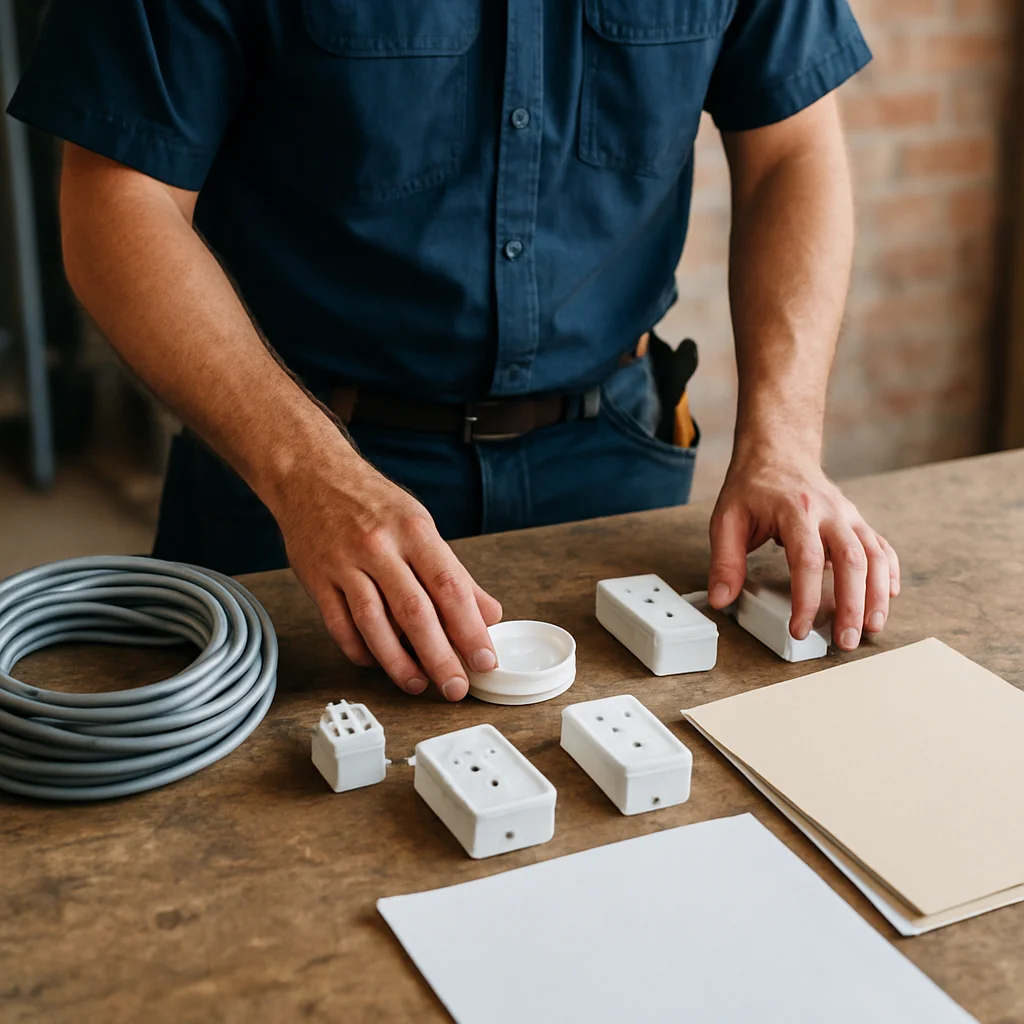 Discuss payment arrangements before the next job begins.
Before work begins, agree who receives the invoice, who approves payment and when payment is due. If you're reviewing that stage of your process, start with the quoting for tradies overview.
For a repeat late payer, review the terms you are willing to offer on future work rather than simply sending more reminders. Consider whether a deposit, staged payments or prepayment would suit the job, but get jurisdiction-specific advice before introducing those arrangements for regulated building work. No deposit limits or contract rules are covered here.
For existing work, don't assume you can change the terms or stop work without checking your obligations. Separate the current debt from the decision about accepting the next job.
Where does StitchedUp fit in invoice follow-up?
StitchedUp's Create & Send Invoices feature lets you create invoices, send them to customers and track invoice status as part of your job workflow. See the StitchedUp features overview for the broader product context.
Use that invoice status as a starting point for your follow-up routine, alongside checks of payments received and any agreement with the customer. The timeline and messages above are a manual process, not a claim that StitchedUp automatically sends this reminder sequence.
If your existing invoicing tool and a simple follow-up log already work well, you may not need another platform. For a disputed debt or formal recovery, professional advice is a better fit than expecting software to resolve it.
If you want to create, send and track invoices within your job workflow, you can get started with StitchedUp.
Frequently asked questions
How long should I wait before chasing an unpaid invoice?+
A practical starting point is one or two business days after the agreed due date, once you have checked for payment and any agreed extension. This is a suggested routine, not a legal deadline.
How do I politely ask a customer to pay an overdue invoice?+
State the invoice number, outstanding amount and original due date. Attach the invoice again and ask for a specific payment date. Keep the wording neutral and avoid apologising for a reasonable payment request.
Should I call or email about a late payment?+
Start with email for a straightforward reminder so the customer has the invoice and payment details. Call if you need to understand a delay or an earlier message has gone unanswered, then confirm any agreement in writing.
How many reminders should I send before a letter of demand?+
This guide does not establish a legally required number. A practical approach is a friendly reminder, direct follow-up and a final reminder, adjusted to the customer's response. Get advice on the appropriate formal step and any relevant deadlines before sending a letter of demand.
What if the customer says they never received the invoice?+
Confirm the correct email address, resend the invoice and ask them to confirm receipt and a payment date. If you agree to a new date, record it rather than leaving the timing unclear.
Does StitchedUp automatically send this reminder sequence?+
The sequence in this guide is a suggested manual routine. The supplied product information confirms that StitchedUp can create and send invoices and track invoice status, but does not establish an automated overdue reminder sequence.
About the author
StitchedUp TeamEditorial team
Practical guides for Australian tradies on quoting, getting paid, winning work and running the business side.
How we research and review articles
StitchedUp
Quote, track and get paid in one place